

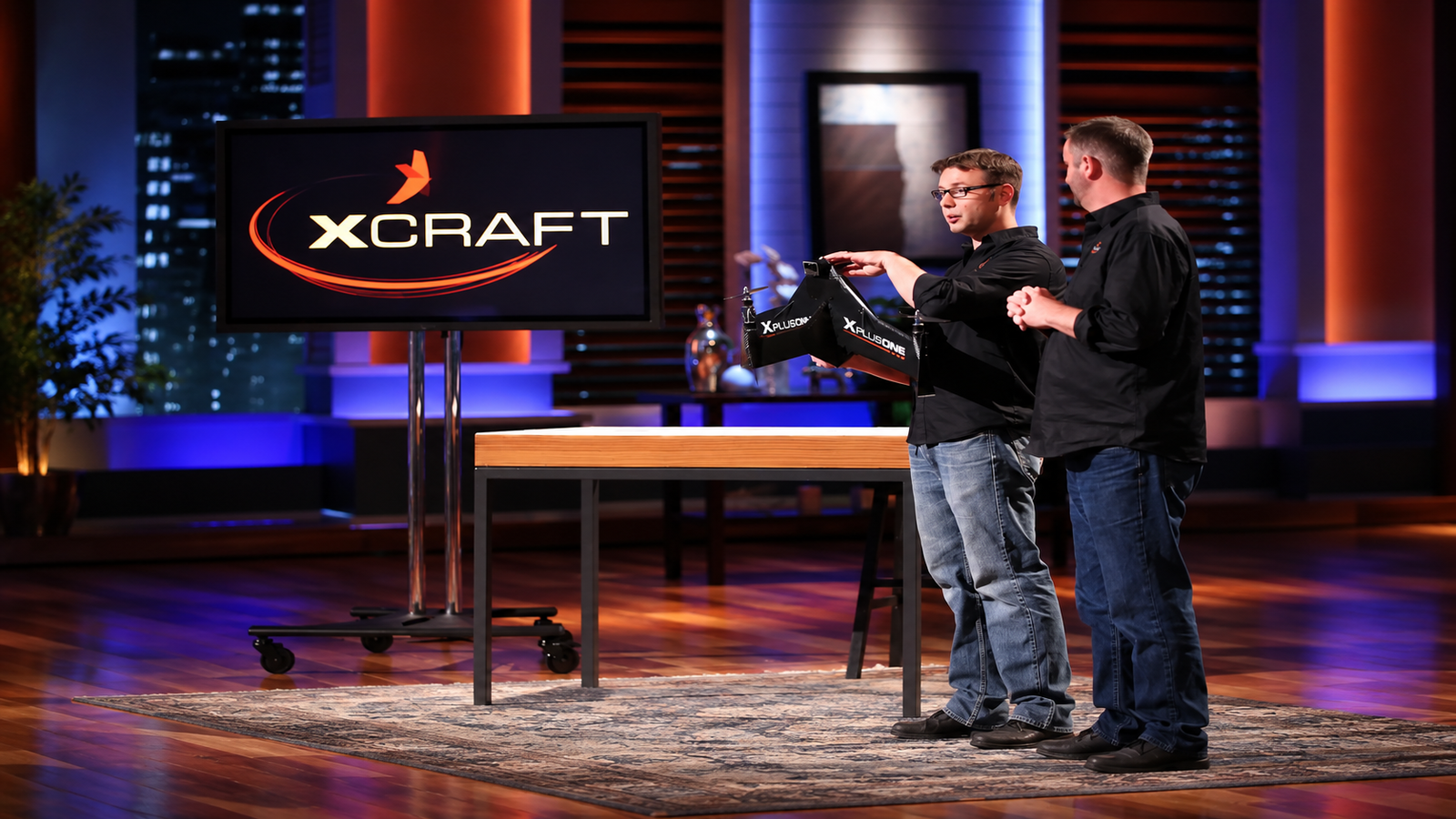
xCraft is an American drone company known for its appearance on Shark Tank. Its 2026 fundraising offer lists a valuation of approximately $57.5 million. That figure represents the price placed on the business before new investment. It does not represent annual earnings or money in the bank.
Behind that number is a business that began with a garage prototype. Today, xCraft develops aircraft for mapping, surveillance, and other commercial work. If you remember its television pitch, its current products show how much its focus has changed.
xCraft Company Overview
xCraft builds unmanned aircraft, commonly called drones. Its customers need aerial equipment for specific jobs, including gathering images and inspecting large areas. The business operates under the legal name xCraft Enterprises, Inc.
| Detail | Information |
|---|---|
| Legal name | xCraft Enterprises, Inc. |
| Cofounders | JD Claridge and Charles Manning |
| CEO | JD Claridge |
| Listed address | Hayden, Idaho |
| Industry | Drone technology and aircraft manufacturing |
| Early prototype development | 2013 |
| First product | XPlusOne |
| Shark Tank appearance | Season 7 in 2015 |
| 2026 offering valuation | Approximately $57.5 million |
The company’s story began before its current corporate structure. Claridge developed prototypes in 2013, while the Delaware corporation dates to February 2017. These dates describe different stages of the business.
xCraft Net Worth in 2026
xCraft’s 2026 offering valuation is approximately $57.5 million. This is the clearest current figure for discussing its proposed business value. However, an offering valuation differs from accounting net worth.
Accounting net worth subtracts liabilities from assets. Using the latest published financial summary, that calculation produces negative book equity of approximately $287,420. The difference matters because investors may price future opportunities above today’s recorded assets.
I would describe the $57.5 million figure as an offering valuation throughout this article. Calling it available wealth would give you the wrong picture. A company can carry a high fundraising price while facing pressure in its accounts.
How Much Revenue Does xCraft Make?
xCraft reported $178,008 in revenue for 2025, compared with $504,452 in 2024. That represents a decline of approximately 64.7%. These are completed annual figures disclosed during 2026, rather than full year 2026 sales.
| Financial measure | 2024 | 2025 |
|---|---|---|
| Revenue | $504,452 | $178,008 |
| Total assets | $219,943 | $91,198 |
| Total liabilities | $369,915 | $378,618 |
| Calculated book equity | Negative $149,972 | Negative $287,420 |
The figures show why revenue deserves attention alongside valuation. Sales became smaller while recorded liabilities increased. The book equity figures above come from subtracting reported liabilities from reported assets. They do not measure the potential sale price of the whole business.
Who Started xCraft?
JD Claridge and Charles Manning brought different skills to xCraft. Claridge supplied the aircraft engineering background. Manning brought technology business experience through Kochava, the analytics company he founded.
Claridge’s interest in flight began during childhood. He later studied aerospace and electrical engineering. In 2013, he started developing the early aircraft prototypes in his garage.
That combination helped turn an invention into a company. Designing an aircraft solves one problem. Building a business around it also requires funding, production planning, and customers willing to pay.
The First xCraft Drone
The XPlusOne launched in summer 2014. Its design combined vertical takeoff with forward flight. It could rise like a drone and then move horizontally like an airplane.
This approach aimed to combine easy takeoff with faster travel. The company’s history reports approximately $150,000 raised through its first Kickstarter campaign. Early crowdfunding helped bring the product beyond the prototype stage.
For a young hardware business, early orders offer useful feedback. They reveal whether people will pay for an idea. However, customer interest also creates production commitments that the company must fulfill.
xCraft’s Shark Tank Appearance
Claridge and Manning appeared on Shark Tank in 2015. They requested $500,000 for a 20% stake. Their aircraft demonstration attracted interest from all five investors.
The televised negotiation ended with an agreement for $1.5 million in exchange for 25% ownership. Each investor would contribute $300,000 for a 5% stake. Follow up coverage reports that the deal never closed.
The appearance still introduced xCraft to a much wider audience. However, the televised agreement should not be counted as money the company received. Public attention and completed investment are separate parts of its story.
How xCraft Makes Money
xCraft’s commercial offering centers on selling drone systems and developing aircraft for particular tasks. Its website describes work across enterprise and military markets. These customers need equipment suited to practical requirements, rather than casual flying.
Different jobs require different equipment. A mapping customer needs useful aerial images. A security customer may need a camera that stays above one location. Those needs influence the aircraft, controls, and camera package.
xCraft also provides training videos and support information for operators. These resources help customers understand setup and use. The training page does not establish a separate paid training income stream, so I would not count one.
xCraft Products and Their Uses
The current product range extends beyond the original XPlusOne. Its website lists tethered systems, mapping aircraft, and compact drones. Each product serves a different type of operation.
| Product | Main purpose |
|---|---|
| Panadrone | Stationary aerial monitoring |
| Matrix RTK | Surveying and mapping |
| Maverick Mapper | Collecting aerial site images |
| Matrix SE | Inspection and public safety applications |
A wider range gives buyers more choices within one brand. Still, having several products does not automatically create strong sales. Each system needs customers who find its performance and price suitable for their work.
Panadrone
Panadrone uses a powered tether and a ground station called a nest. The system supports automated launch and landing. Its camera options include thermal imaging and zoom.
The company lists an operating altitude of up to 400 feet. The tether supplies power, supporting extended monitoring when ground power remains available. This design suits work focused on one location.
Matrix RTK and Maverick Mapper
Matrix RTK targets surveyors and engineers. Its package includes an aircraft, controller, camera equipment, battery, and carrying case. The company describes precise flight positioning through its supporting GPS system.
Maverick Mapper also focuses on aerial mapping. Its published specifications describe coverage of up to 40 acres during a 25 minute flight. Actual coverage depends on the mission and operating conditions. xCraft
What Assets Does xCraft Have?
The latest disclosed annual figures list approximately $91,198 in total assets. They also list about $6,986 in accounts receivable. Receivables represent amounts customers owe, rather than cash already collected.
Beyond accounting figures, xCraft’s business rests on aircraft designs, technical knowledge, and product development. Its official company profile describes patented technology and continued engineering work. Those resources help explain its commercial offering, although they do not establish a separate cash value.
You should therefore keep two questions separate. What resources does the company use to operate? What value appears in its financial records? Neither answer alone tells you what a buyer would pay.
xCraft’s 2026 Fundraising
The 2026 offering sells Class B nonvoting common shares at $11.98 each. Its filing sets a minimum fundraising target of $10,003.30 and a maximum of $123,993. The stated deadline is December 31, 2026.
Planned uses include marketing, research, employment, inventory, and working capital. These categories cover both product development and everyday business needs. Investment funding differs from customer revenue because investors receive ownership in return.
xCraft’s Business Success Story
xCraft’s progress includes moving from garage development to a commercial product range. Its aircraft now address jobs beyond consumer photography. The company describes applications in utilities, public safety, agriculture, and surveillance.
Its financial results make the story more mixed. Product development and television exposure created opportunities. Lower recent revenue shows that attention does not guarantee steady customer demand.
Future progress will depend on converting its technology into repeatable sales. Reliable equipment, customer support, and careful spending will matter. Those practical results will tell you more than a fundraising headline alone.
Frequently Asked Questions
Is xCraft Still Operating in 2026?
Yes. Its website continues to display products, support resources, and customer inquiry options. The company also filed a new offering statement in August 2026.
Did All Five Sharks Invest in xCraft?
All five agreed to the televised proposal. Follow up reporting says the investment never closed. The proposed amount should therefore not be treated as received funding.
Does xCraft’s Valuation Equal Its Income?
No. Valuation prices ownership in the business. Income and revenue describe financial performance over a period. For xCraft, keeping those figures separate gives you a much clearer understanding of its position.
